


Contents
Scroll to:
https://doi.org/10.17073/2500-0632-2024-07-284
Scroll to:
The completeness of oil recovery under elastic water-drive conditions depends on numerous factors, including the geological structure of the reservoir, the properties of the oil-bearing formations, the interaction between the production zone and the peripheral area, the current reservoir pressure relative to the initial level, and the extent to which the productive horizons are swept by waterflooding throughout their thickness and areal distribution. The main objective of this study is to evaluate the remaining oil reserves in the field and to develop technologies for their efficient recovery. The degree of reserve depletion was assessed through a comprehensive analysis of all available data, enabling the identification of the oil–water contact (OWC) front movement and the current energy state of the reservoir. The assessment of recovery completeness was carried out using the results of field–geophysical surveys, the characteristics of oil-displacement by water, and data from hydrodynamic modelling. Geophysical monitoring was performed for each well individually to track the OWC position and identify water-swept zones of the productive reservoir. The Pulsed Neutron–Neutron Logging (PNNL) method was employed for real-time monitoring of oil–water interface movement during field development. It was established that the remaining recoverable reserves (RRR) account for 32.5% of the initial recoverable reserves (IRR). The current oil recovery factor (ORF) is 0.507. The field is currently at the fourth stage of development, characterized by a high water cut (94.8%) and a low annual oil-production rate (1.71–2.32% of the IRR).
Bosikov I.I., Klyuev R.V., Silaev I.V. Identification of remaining oil reserves at the late stage of development of the Gilbert field using integrated geophysical data. Mining Science and Technology (Russia). 2025;10(4):346–356. https://doi.org/10.17073/2500-0632-2024-07-284
The efficiency of oil recovery under elastic water-drive reservoir conditions depends on multiple factors, including the geological structure of the field, reservoir properties, the nature of interaction between the production zones and the peripheral aquifer, the current reservoir pressure relative to the initial level, the areal and vertical sweep efficiency of the waterflooding process, and a number of other conditions.
The Gilbert oil field was discovered as a result of seismic exploration conducted within the northern part of the Sunzha anticline structure in the North Caucasus region, which is known for its Oligocene oil-bearing formations. The exploration activities were carried out by Geofizinfo LLC in 1996–1997. Subsequently, the obtained data were verified through detailed Common Depth Point (CDP) processing performed by Regiongeofizika JSC from 1997 to 1999. Exploratory drilling began in December 2001 with the spudding of the first prospecting well (No. 1). In the spring of 2002, testing of Middle Cambrian sandstone reservoirs yielded significant inflows of high-quality crude oil, confirming the presence of commercially viable hydrocarbon reserves in the area.
The commercial oil potential of the Gilbert field has been confirmed through a comprehensive suite of studies, including core analysis, well logging data, and successful testing of oil-bearing intervals conducted both during drilling and after geological and technical operations.
The objective of this study is to evaluate the remaining recoverable oil reserves in the field and to develop technologies for their efficient recovery. This evaluation is based on a complete dataset enabling the assessment of the waterflood front advancement and the overall energy state of the reservoir.
The research methods are based on field and geophysical data, oil displacement characteristics, and hydrodynamic modeling. Geophysical investigations were aimed at monitoring the movement of the oil–water contact (OWC) and identifying water-swept zones within the productive horizon. Control of the OWC position was performed using the Pulsed Neutron-Neutron Logging (PNNL) method [1–3]. This method is among the most effective well logging techniques applied for lithological characterization of formations, determination of porosity, evaluation of hydrogen content, and identification of hydrocarbon-bearing zones [3–5].
The advantages of PNNL compared to other methods include: high sensitivity to hydrogen content; determination of effective porosity; delineation of productive intervals; minimal influence of rock density; environmental safety; and compatibility with modern data processing technologies.
Therefore, PNNL offers several benefits that enable obtaining detailed information on rock properties and effectively identifying productive intervals, providing a reliable basis for planning further exploration and development activities [4–6].
The research design involves monitoring the advancement of the OWC and detecting water-swept intervals of productive formations, along with implementing an integrated approach to studying oil recovery processes and well performance monitoring [6, 7].
The main objectives of the study are as follows:
The scientific novelty of the study lies in the development and validation of an integrated methodology for localizing residual oil reserves at a late stage of field development in geologically complex reservoirs. The methodology includes the following elements:
The data obtained in March 2002 during the testing of the first well indicated that the water-free oil production rate stabilized at 8.07–11.22 m³/day with 2–4 mm chokes and drawdowns of 2.86–3.67 MPa. The lowest point of the perforated interval, from which oil was produced (with flow rates varying from 8.1 to 11.2 m³/day), was located at an absolute elevation of −1988.1 m (approximately 2038–2040 m in measured depth). Due to the complex lithological structure of the reservoir — characterized by thin interbedding of sand and clay layers — precise determination of the oil–water contact (OWC) was challenging. The conditional boundary of the productive interval was established at a depth of 2047.4 m (absolute elevation −1995.3 m). According to the results of testing Well No. 1 conducted in May 2003 (perforation interval 2023–2038 m), the production rate of nearly pure oil ranged from 27.0 to 60.5 m³/day with 3–5 mm chokes and drawdowns of 1.8–3.7 MPa [7]. The productivity index was estimated at 15.0–16.3 m³/(d·MPa) [8–10]. The first two exploratory wells were drilled within the oil-bearing contour: Well No. 1 located at the central site and Well No. 2 in its immediate vicinity. Additional studies, including detailed seismic data reprocessing and interpretation of all previously acquired information, were carried out after drilling Wells No. 1 and No. 2 in 2002, allowing the structural model of the Sunzha anticline to be refined. Analysis of the production performance of subsequent development wells (Nos. 3–9) showed the highest productivity indices in Wells No. 3 and No. 9 — approximately 40.9 and 53.3 m³/(d·MPa), respectively — with total liquid production (oil + water) ranging from 37.2 to 62.8 m³/day and 55.2 to 132.2 m³/day. The lowest values were recorded in Wells No. 4, No. 7, and No. 8, ranging from 9.0 to 12.9 m³/(d·MPa).
Such a wide variation in productivity parameters clearly indicates pronounced zonal heterogeneity of the reservoir. It is noteworthy that already at the stage of preparing the initial development plan [10–12], based on data from exploration and appraisal wells drilled in the central part of the Sunzha structure, poor reservoir storage and permeability properties were identified, which was reflected in the inflow performance relationship (IPR) curves.
During the hydrodynamic analysis, the reservoir temperature was determined to average approximately 58 °C.
The obtained experimental data made it possible to justify the initial reservoir pressure and to calculate productivity indices. The near-wellbore permeability and hydraulic conductivity were determined using the Dupuit equation [13–15].
The position of the initial oil–water contact was determined based on well test results and field–geophysical investigations.
Measurements by the Pulsed Neutron-Neutron Logging (PNNL) method were interpreted for nine wells. A comprehensive suite of well logging surveys (GIS) – including inflow profiling (thermometry, thermal flowmeter logging, and spinner flowmeter logging) – was performed in six wells.
Nearly all wells, except for horizontal ones, have been surveyed using field–geophysical methods throughout the development history. In total, 17 PNNL surveys were conducted in nine wells and seven inflow profile studies were performed.
The upward movement of the OWC is non-uniform. The main factors controlling the dynamics of this process include the geological structure of the accumulation, the drilling rate, and the rate of reservoir fluid production. An important role is also played by vertical heterogeneity of the productive formations: the upper part is composed of sandstones with variable grain size; the middle part is characterized by increased heterogeneity and includes sandstones with a high content of silt and clay fractions; the lower part consists predominantly of sandstones [15, 16].
Oil saturation was classified according to the following criteria: the reservoir contains essentially pure oil when the oil saturation exceeds 0.7 (70%); the reservoir is considered oil–water saturated with oil prevailing at saturation values from 0.6 to 0.7 (60–70%), including the lower boundary of 0.6; mixed oil–water saturation is characteristic of the interval from 0.3 to 0.6 (30–60%); at values below 0.3 (less than 30%), the pore space is fully saturated with water [16–18].
Well No. 1 is located in the near-contour zone in the northern part of the field. The geological section includes both high-capacity reservoir layers with porosity of 10–16% and thin interbeds with porosity of 2–6%. The producing interval at 2038–2040 m was perforated in 2002; testing with a 3 mm choke yielded an oil rate of 9.76 m³/d. The 2023–2038 m interval was perforated later, in 2013. Production from the well started in August 2004. Pulsed Neutron-Neutron Logging (PNNL) was run three times: immediately before the start of production and again in May 2019, when the water cut of the produced fluid was about 3%. Earlier, in 2006, comprehensive hydrodynamic surveys had been carried out at a low water cut (up to 3%), including PNNL, gamma-ray logging (GR), casing-collar locator (CCL), and inflow profiling [18, 19]. According to the 2019 PNNL results, intervals with a mixed “oil + water” fluid composition are identified from a depth of 2035.8 m, while “water + oil” intervals occur from 2038.4 m; clearly water-bearing zones are located below 2040.6 m.
Analysis of the gamma-ray log indicates that the main source of oil inflow is the upper part of the perforated interval (2023–2025 m), whereas water is produced predominantly from the lower perforation shots at 2039–2040 m. The repeated PNNL survey showed that the penetration zone of the “oil + water” mixture is confined to the upper part of the section (2023.6–2024.2 m); below, down to 2025 m, a “water + oil” composition dominates. Intermediate “water + oil” zones are also observed in the 2025.2–2025.8 m and 2032.0–2032.8 m intervals. These intervals are characterized by low oil saturation (0–8%), which confirms progressive layer-by-layer replacement of oil by water [19].
Thus, the low oil saturation in the 2039.8–2040.6 m interval according to the industrial cut-off criteria (oil saturation So = 33%) and the appearance of water from deeper zones support the conclusion that the oil–water contact has migrated upward concurrently with layer-by-layer waterflooding of the section penetrated by the well.
Based on this analysis, a well intervention plan was proposed for Well No. 1: upon reaching a critical water cut of 99%, to isolate the currently producing perforation intervals 2038–2040 m (main) and 2023–2038 m (extended) by setting a pressure cement plug, followed by drilling out the cement plug and perforating the upper part of the reservoir in the 2023–2030 m interval.
According to PNNL data obtained from Well No. 2 at the initial stage of production, when the water cut did not exceed 1% (before near-wellbore stimulation), the section was characterized as oil-saturated.
Four months after the stimulation treatment, inflow-profile logging (1–6 December 2005) showed that almost the entire perforated interval contributed to production.
PNNL surveys demonstrated that the decrease in oil saturation was accompanied by a rise in the OWC. The current OWC position in the studied well is approximately two metres higher than the depth recorded during drilling.
In 2012, a further decline in oil saturation to 25–55% was recorded in the 2159.4–2164 m interval, along with evidence of layer-by-layer waterflooding in the lower part of the penetrated reservoir interval.
According to PNNL data acquired at water cuts above 80%, completely swept zones were observed within the perforated intervals. Below the perforated section, both oil-saturated layers and mixed oil-and-water intervals were identified, indicating layer-by-layer waterflooding in the lower unperforated portion of the section. However, no further upward movement of the OWC was detected.
Based on these results, geological and technical interventions were carried out in 2018–2019, including extended perforation of the 2168–2171 m interval combined with isolation of all previously opened zones. According to PNNL data, oil saturation in the newly opened interval reached 76–89%.
The results of PNNL analysis indicate both the upward movement of the OWC and layer-by-layer waterflooding of the productive formations; in some cases, these two processes were observed simultaneously.
Analysis of OWC rise dynamics over time showed that, at the early stage of field development, the rate of OWC movement was non-uniform. As of 2006, the difference in OWC depth among the five monitored wells reached 13 m. The total fluid production rate in these wells ranged from 15 to 20 t/d, with drawdowns between 1.9 and 3.6 MPa. The greatest OWC displacement was observed in Wells No. 8 and No. 9, where the rise reached approximately 15 m.
Repeat surveys revealed the following changes in OWC level: in Well No. 2, the rise over a five-year period amounted to only 1.4 m; in Well No. 8, an increase of 7.6 m was recorded over seven years of production; whereas in Well No. 9, the OWC rose by 1 m within one year.
According to the trend relationships shown in Fig. 1, the current average OWC level is estimated at an absolute elevation of −1984 m.
The obtained results suggest that layer-by-layer waterflooding predominantly occurs in the peripheral zones of the field, extending from the northeast toward the southeast, whereas upward OWC displacement prevails in the central zones. Based on the interpretation of PNNL data and production history, it can be concluded that the remaining recoverable reserves (RRR) are mainly localized within the central dome-shaped area in the northeastern part of the oil reservoir.
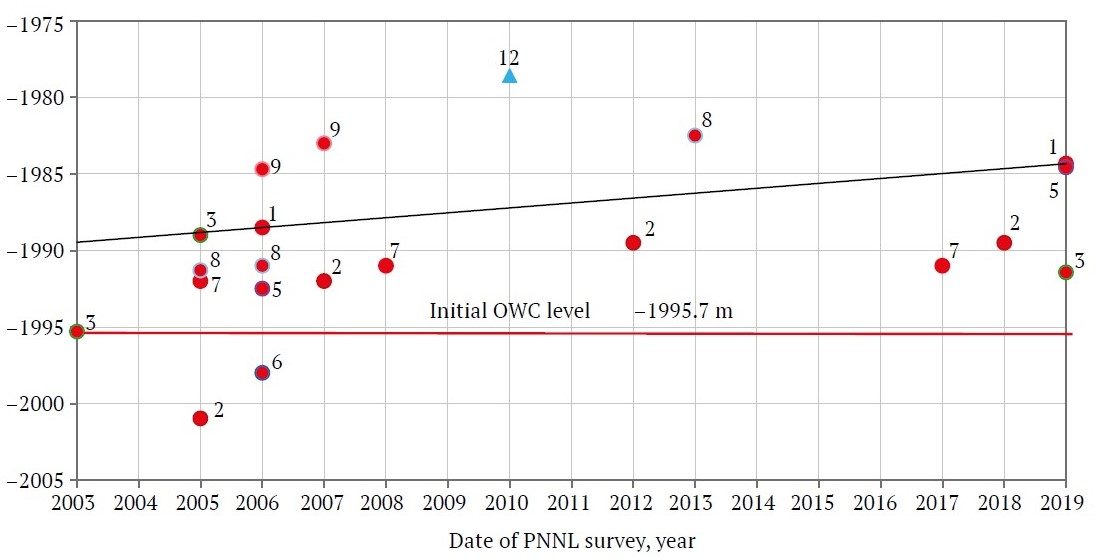
Fig. 1. Evaluation of OWC rise at the Gilbert field based on PNNL data
In 2012, tracer tests were carried out at the Gilbert field. A tracer agent was injected into water-injection Well No. 12 to identify hydrodynamic communication between the injection and production wells, determine the actual flow velocities and directions of the injected water and reservoir fluids, and evaluate the influence of the injection well on the performance of the producing wells.
Several wells are characterized by the presence of a dominant permeable layer, distinguished by a pronounced increase in tracer concentration. In Wells No. 4, 5, and 6, this layer was detected at the first tracer breakthrough, whereas in Wells No. 1, 2, 3, 10, and 11 it appeared only at the fourth arrival. The exception was Well No. 8, where tracer concentrations remained stable throughout the observation period.
Tracer concentration is inversely proportional to the number of major conductive layers. A distinctive feature of Well No. 5 is its extremely high tracer concentration, which indicates the presence of a small-volume but highly conductive flow channel. This suggests the existence of a fracture or zones of intensely developed reservoir rock (“super-reservoirs”). At present, this well shows the lowest water cut among comparable deviated wells (about 90%).
Water breakthrough at the Gilbert field began as early as 2007, when several wells exhibited a rapid increase in water cut to 70–80%. During the following thirteen years, the average annual growth rate of water cut ranged from 11 to 14%. After the commissioning of injection Well No. 12 in December 2010, the water cut in most deviated wells ranged from 42 to 82%.
Since 2011, the rate of water-cut increase has gradually declined: the annual growth dropped from 9.2% to negligible values of about 0.1% by 2016. For example, in Well No. 8, the water cut decreased from 90.8% in January 2016 to 84% by the end of December.
Thus, operation of injection Well No. 12 did not cause a significant increase in water cut, which agrees with the results of hydrodynamic modelling, indicating that shutting in Well No. 12 would have a minimal impact on oil-production water cut (less than 1%).
The displacement characteristics provide an integrated representation of the actual oil recovery processes and the associated dynamics of reservoir waterflooding during the late stage of field development. Converting production parameters into displacement characteristics and selecting an appropriate empirical correlation make it possible to estimate the potential volumes of recoverable oil.
It should be noted that the most accurate determination of displacement characteristics is feasible for productive horizons with an extended production history and a water cut exceeding 80–90%. Field data collected over a 16-year period show a consistently high water cut in produced fluids and significant depletion of oil reserves.
The displacement characteristics were used to estimate the RRR under current development conditions, based on established analytical methods. Calculations were performed both using water-cut growth curves and production-rate decline relationships. The resulting values are presented in Table 1.
Table 1
Oil recovery factor (ORF) estimates for the Gilbert field based on displacement characteristics (different methods)
Indicator | Water-cut curves | Production decline curves | Average values | |||
A.M. Pirverdyan’s method | S.N.Nazarov– N.V.Sipachev method | G.S. Kambarov’s method | A.M. Pirverdyan’s method | G.S. Kambarov– A.V. Kopytov method | ||
Cumulative oil production as of 01.01.2020, thousand tons | 682 | 682 | 682 | 682 | 682 | 682 |
Cumulative oil production at the end of development, thousand tons | 788 | 758 | 749 | 948 | 821 | 813 |
Incremental oil production as of 01.01.2023, thousand tons | 106 | 76 | 67 | 266 | 139 | 131 |
Calculated ORF | 0.583 | 0.560 | 0.554 | 0,701 | 0.607 | 0.601 |
Approved ORF | 0.605 | |||||
At a final water cut of 98%, the average RRR value is only slightly below 131 thousand tons. The actual displacement characteristics and forecast indicators derived from them are shown in Fig. 2.
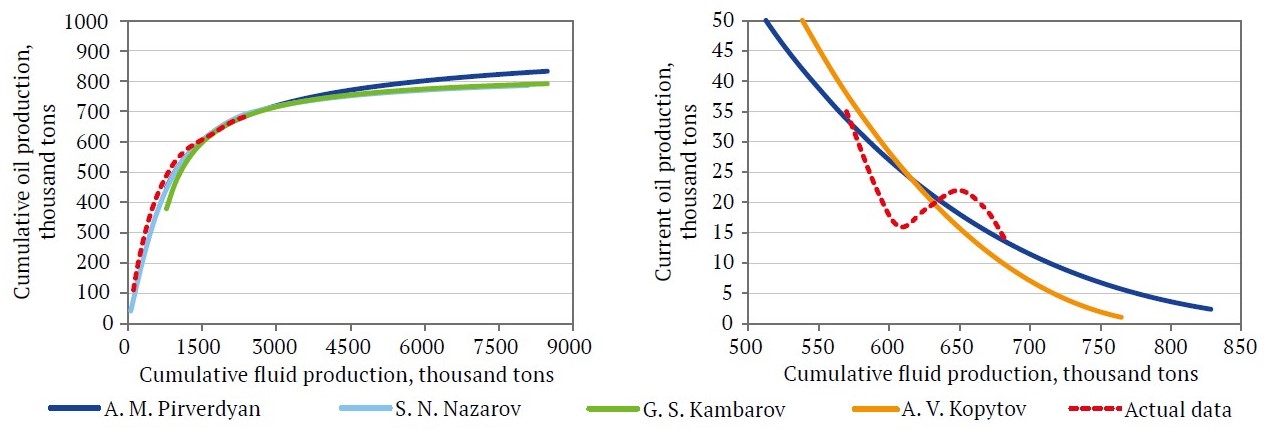
Fig. 2. Displacement characteristics of the Gilbert field
Fig. 2 presents both actual and calculated displacement characteristics used to assess the redevelopment potential of the field. The left-hand graph illustrates the relationship between cumulative oil and liquid production, while the right-hand graph shows the relationship between current oil rate and water cut. The divergence between the actual data (solid lines) and the predicted curves (dashed lines) in the region of high water cut values (> 90%) and large cumulative liquid production indicates additional recovery potential, estimated at an average of 131 thousand tons of oil. These relationships formed the basis for calculating the oil recovery factor and determining the remaining reserves.
To further evaluate the efficiency of field development, displacement characteristics showing the relationship between water cut and oil recovery degree were constructed (Fig. 3).
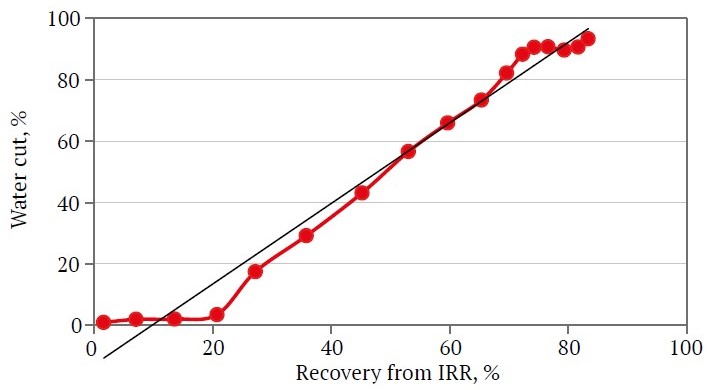
Fig. 3. Relationship between low-viscosity hydrocarbon recovery and reservoir water cut for the Gilbert field
The plots illustrate the dynamics of reservoir waterflooding as reserves are depleted. The horizontal axis represents the recovery degree relative to the initial recoverable reserves (IRR, %), while the vertical axis shows the water cut of produced fluids (%). The solid line corresponds to actual field data, whereas the dashed line represents the fitted empirical correlation (displacement characteristic) used to forecast performance parameters up to the economic limit water cut (98%). Analysis of the curve confirms that the field has entered the final stage of development, with the current water cut at 94.8% and 84.2% of the IRR recovered.
A single Middle Cambrian reservoir (Horizon 2) is currently under development. The recovery degree for this reservoir is 83.4%, which corresponds to the value recorded in the State Reserve Balance as of 1 January 2022. The water cut of produced fluids reaches 94.8%. The slight discrepancy between the recovery degree relative to the IRR and the water cut level indicates that the planned ORF and cumulative production reported in the State Reserve Balance have been achieved as of the specified date.
Analysis of the available data indicates that reservoir water encroachment is driven by two mechanisms: upward movement of the OWC and layer-by-layer waterflooding. Layer-by-layer waterflooding mainly occurs in the peripheral zones of the field, extending from the northeast toward the southwest, whereas upward OWC movement predominates in the central part of the accumulation. Based on the interpretation of PNNL neutron–carbonate logs and production history data, accumulations of remaining unrecovered oil were identified in the northeastern part of the reservoir near the fractured zones around Wells No. 1 and No. 8, as well as in the central area near Wells No. 2 and No. 4.
Analysis of the displacement characteristics made it possible to estimate the expected volume of RRR under current development conditions. The predicted RRR values range from 67 to 266 thousand tons, with an average of approximately 131 thousand tons.
The degree of depletion and the spatial distribution of the remaining oil were verified through hydrodynamic modelling (as of 1 January 2022), which provided a more accurate assessment of the current recovery degree (Table 2).
Table 2
Oil recovery performance of the Gilbert field as of 01 January 2022
Field | Reservoir | Reserve category | Initial geological reserves, thousand tons | Approved ORF | Initial recoverable reserves, thousand tons | Cumulative oil production as of 01.01.2022, thousand tons | Recovery from IRR, % | Current ORF | Current water cut, % | Remaining recoverable reserves, thousand tons | Remaining recoverable reserves, % |
Gilbert | Middle Cambrian | А | 1582 | 0.609 | 997 | 785 | 84.2 | 0.507 | 94.8 | 185 | 18.5 |
Fig. 4 shows the distribution of movable oil reserves in the Middle Cambrian reservoir of the Gilbert field at the initial stage of development (as of 01 January 2019, the date of project preparation – 2020) and as of 01 January 2022. The density maps indicate that the highest concentrations of movable reserves occur in areas of maximum initial oil-saturated thickness.
Analysis of the obtained data reveals the following:
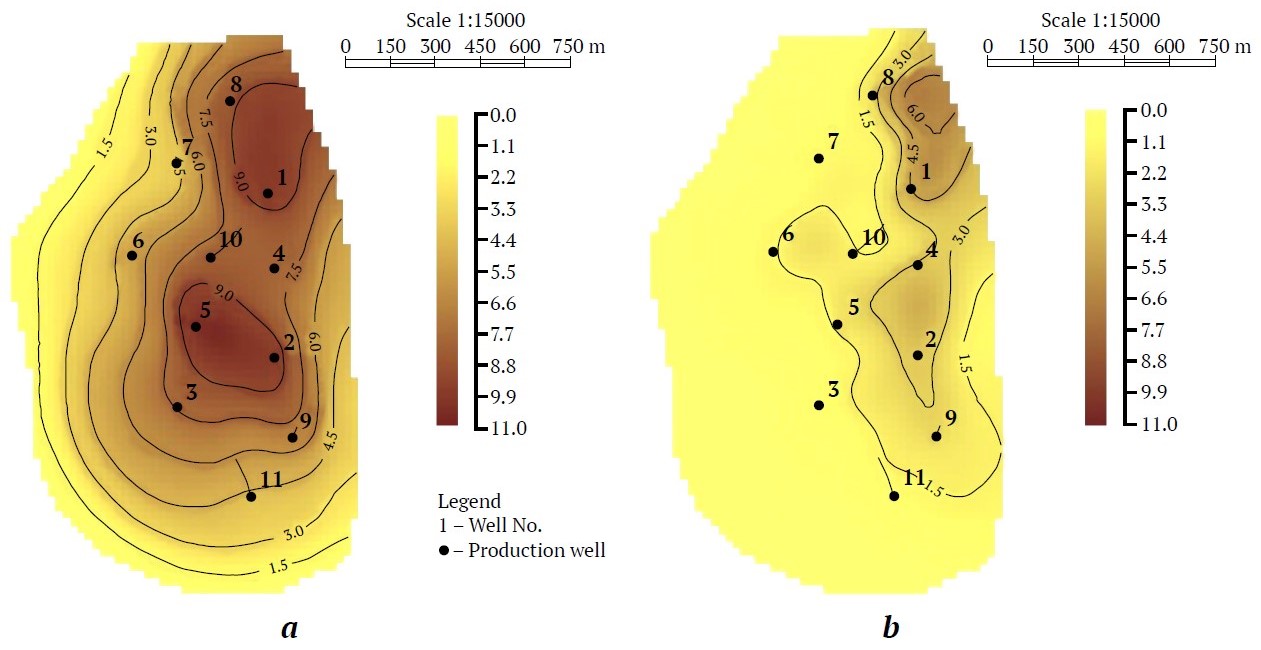
Fig. 4. Map of movable oil reserves in the Gilbert field: a – at the start of development (2019); b – as of 01 January 2022
Fig. 4 presents spatial distribution maps of movable oil reserve density: (a) at the initial stage of development (2019) and (b) as of 01 January 2022. Analysis of these maps demonstrates significant reserve redistribution resulting from field depletion. The highest concentration of remaining movable reserves persists in the northeastern part of the accumulation near Wells No. 1 and No. 8 and in the central area near Wells No. 2 and No. 4. Comparison of the maps highlights the zones of most intensive depletion and confirms the localization of residual reserves within near-wellbore areas characterized by the best reservoir storage and permeability properties.
The findings of this study have the following practical implications:
This study shifts field management at the late stage of development from a predominantly operational focus to a strategic one. The identified redevelopment potential provides a sound basis for economically justified extension of the field’s productive life.
Previously, geological and technical interventions were associated with high risk due to uncertainty in the location of productive intervals. The proposed methodology allows operators to move from uniform well servicing to a selective investment strategy. Clear spatial localization of remaining reserves makes it possible to design an optimized program of geological and technical interventions and avoid costly exploratory operations.
Most of the additional oil production can be obtained from the existing well stock, which reduces the need for new capital-intensive infrastructure and significantly improves project profitability. Realizing the identified potential will move the recovery factor closer to the approved target, effectively converting part of the reserves into commercially recoverable volumes. Thus, the economic value of this work lies not only in the direct monetization of additional oil volumes, but also in the development of a management framework that supports a profitable and orderly completion of field development.
Based on a comprehensive analysis of oil recovery performance at the Gilbert field using geographic information systems and field–geophysical data, the following conclusions can be drawn:
In summary, the study has provided a detailed picture of the current state of the Gilbert field, substantiated the volume and distribution of the remaining recoverable reserves, and proposed measures to enhance oil recovery. These results are expected to reduce technological risks and improve the economic efficiency of further field development.
1. Bembel R. M., Sukhov V. A., Schetinin I. A. Ways of increasing geological efficiency of hydrocarbon fields development in Western Siberia. Oil and Gas Studies. 2017;(6):6–10. (In Russ.) https://doi.org/10.31660/0445-0108-2017-6-6-10
2. Bosikov I. I., Klyuev R. V., Khetagurov V. N., Silaev I. V. Comprehensive assessment of hydrodynamic processes in the Klinskoye Quarry with the use of their control methods in rock masses. Sustainable Development of Mountain Territories. 2023;15(2):284–297. (In Russ.) https://doi.org/10.21177/1998-4502-2023-15-2-284-297
3. Gayduk V. V. The nature of the oil and gas potential of the Tersko-Sunzhensky oiland gas-bearing region. Geology, Geophysics and Development of Oil and Gas Fields. 2019;(2):40–46. (In Russ.) https://doi.org/10.30713/2413-5011-2019-2-40-46
4. Medvedev N. Y. Geotechnological basis for the development of oil pools with hard-to-recover reserves. Moscow: VNIIOENG; 1997. 336 p. (In Russ.)
5. Danilov V. N. Formation of thrusts and hydrocarbon potential of Urals Foredeep. Russian Oil and Gas Geology. 2021;(1):57–72. (In Russ.) https://doi.org/10.31087/0016-7894-2021-1-57-72
6. Jafarov R. R., Rahimov F. V., Hashimova G. I. Perspectives of upper kirmaki clay suite in Chilov field. Azerbaijan Oil Industry Journal. 2020;(12):12–16. (In Russ.) https://doi.org/10.37474/0365-8554/2020-12-12-16
7. Ivlev D. A. Method for regional forecast of oil and gas potential territories by machine learning algorithms on the example of the Tyumen formation of Western Siberia. Bulletin of the Tomsk Polytechnic University. Geo Assets Engineering. 2021;332(1):41–53. (In Russ.) https://doi.org/10.18799/24131830/2021/1/2998
8. Kaukenova A. S. Oil and gas potential of the south Turgay basin. Proceedings of higher educational establishments. Geology and Exploration. 2020;(3):38–45. (In Russ.) https://doi.org/10.32454/0016-7762-2020-63-3-38-45
9. Kobylinsky D. A. Criteria for determining the oil and gas potential of the territory based on the data of ground geochemical survey performed on the ground and artificial sorbent. The Eurasian Scientific Journal. 2020;12(6):1–10. (In Russ.) URL: https://esj.today/PDF/51NZVN620.pdf
10. Kuznetsov V. G., Zhuravleva L. M. Reef formations in the West Canada basin and their oil and gas potential. Lithology and Mineral Resources. 2018;53(3):236–251. https://doi.org/10.1134/S0024490218030045 (Orig. ver.: Kuznetsov V. G., Zhuravleva L. M. Reef formations in the West Canada basin and their oil and gas potential. Litologiya i Poleznye Iskopaemye. 2018;(3):257–273. (In Russ.) https://doi.org/10.7868/S0024497X18030047)
11. Gainanshin R. N., Khafizov S. F., Abramov V. Y. et al. Oil and gas perspective assessment and the choice of the exploration program based on the multivariate geological modeling. Territorija Neftegaz. 2019;(3):12–16. (In Russ.)
12. Bosikov I. I., Klyuev R. V., Revazov V. Ch., Martyushev N. V. Analysis and evaluation of prospects for high-quality quartz resources in the North Caucasus. Mining Science and Technology (Russia). 2023;8(4):278–289. https://doi.org/10.17073/2500-0632-2023-10-165
13. Panikarovskii E. V., Panikarovskii V. V., Anashkina A. E. Vankor oil field development experience. Oil and Gas Studies. 2019;(1):47-51. (In Russ.) https://doi.org/10.31660/0445-0108-2019-1-47-51
14. Sharafutdinov V. F., Cherkashin V. I., Musikhin V. A. et al. Prospects of oil and gas production of michael deposits of Buy-Naks depression of pre-degrenary Daghestan. Proceedings of the Institute of Geology of the Dagestan Scientific Center of the Russian Academy of Sciences. 2018;1(72):17–23. (In Russ.) https://doi.org/10.31161/2541-9684-2018-62-1-17-23
15. Bronskova E. I. Comprehensive analysis of April field geological structure to provide effective additional exploration and development of Tyumen suite deposits. Geology, Geophysics and Development of Oil and Gas Fields. 2016;(8):36–44. (In Russ.)
16. Sevostyanova R. F., Sitnikov V. S. The development of ideas about the structure and oil and gas potential of Nepa-Botuoba anteclise and adjacent part of Predpatomskii trough. Journal of Mining Institute. 2018;234:599–603. https://doi.org/10.31897/pmi.2018.6.599
17. Cherkashin V. I., Sabanaev K. A., Gadzhieva T. R. Tectonic structure and perspectives of oil and gas sedimentary cover of the bottom of the Caspian Sea. Proceedings of the Institute of Geology of the Dagestan Scientific Center of the Russian Academy of Sciences. 2018;4(75):24–29. (In Russ.) https://doi.org/10.31161/2541-9684-2018-62-4-25-30
18. Ulmasvay F. S., Dobrynina S. A., Sidorchuk E. A. New regularities in the distribution of oil and gas in sedimentary stratum (by the case of Ciscaucasia). Actual Problems of Oil and Gas. https://doi.org/10.29222/ipng.2078-5712.2018-20.art8
19. Bosikov I. I., Klyuev R. V., Martyushev N. V. et al. Analysis of the quality of underground mineral waters of terrigenous deposits of the hauterivbarremian aquifer of the lower cretaceous. News of the National Academy of Sciences of the Republic of Kazakhstan. Series of Geology and Technical Sciences. 2024;2(464):36–47. https://doi.org/10.32014/2024.2518-170x.392
Igor I. Bosikov – Dr. Sci. (Eng.), Associate Professor, Head of the Department of Oil and Gas Engineering
Vladikavkaz
Scopus ID 56919738300
Roman V. Klyuev – Dr. Sci. (Eng.), Associate Professor, Professor of the Department of Low-Temperature Engineering named after P. L. Kapitsa
Moscow
Scopus ID 57194206632
Research J-8000-2014
Ivan V. Silaev – Cand. Sci. (Eng.), Associate Professor, Head of the Department of Physics and Astronomy
Vladikavkaz
Scopus ID 57189031683
Bosikov I.I., Klyuev R.V., Silaev I.V. Identification of remaining oil reserves at the late stage of development of the Gilbert field using integrated geophysical data. Mining Science and Technology (Russia). 2025;10(4):346–356. https://doi.org/10.17073/2500-0632-2024-07-284




Editor-in-Chief
Petrov V.L. Email this article (Login required)
Email the author (Login required)
Email this article (Login required)
Email the author (Login required) 119049, Moscow, Leninsky Prospect, 4, b. 1
The National University of Science and Technology MISIS (NUST MISIS)
Tel.: +7 (968) 848-61-24
E-mail: send@misis.ru





