


Contents
Scroll to:
https://doi.org/10.17073/2500-0632-2025-08-1015
Scroll to:
Coal seam permeability is a key parameter controlling degassing efficiency, the intensity of methane emission, and the safety of mining operations. As permeability decreases with depth and is critically dependent on the stress-strain state, its reliable prediction requires models capable of adequately describing the interaction between sorption-induced deformation, poroelastic effects, and fracture aperture closure mechanisms. Owing to the absence of a unified approach for permeability assessment under complex stress-strain conditions, the objective of this study was to systematize and compare the principal empirical and analytical models describing this dependence. To this end, an analytical review of models accounting for sorption-elastic deformation, porosity evolution, effective stress effects, thermoelastic behavior, and cleat system parameters was conducted. Model comparison was performed through numerical simulations of permeability variation over an effective stress range of 0–50 MPa and at depths of up to 1500 m. The models incorporated parameters such as the Biot coefficient, deformation modulus, sorption compressibility, initial permeability, and geometric characteristics of fractures. The results of the parametric calculations demonstrate that, despite conceptual differences, all models exhibit a common trend of nonlinear permeability reduction with increasing effective stress. This behavior reflects the physical processes of pore space compression and fracture aperture reduction. It was established that the most intensive permeability decline occurs within the effective stress range of 5–15 MPa, corresponding to active cleat closure, whereas at depths exceeding 1000 m permeability changes tend to stabilize due to exhaustion of the deformation potential of the fracture structure. Overall, the analysis revealed differing model sensitivities to geomechanical parameters, with the influence of sorption-induced deformation being comparable to that of poroelastic effects. Model selection is shown to be condition-dependent: the Seidle (1992) model is most suitable for accounting for sorption-induced deformation, the Palmer & Mansoori (1998) model for deep coal seams with variable porosity, and the Karkashadze & Hautiev (2015) model for describing elastic deformation effects. The derived relationships can be applied to assess the natural permeability of coal seams in undisturbed rock masses.
Manevich A.I., Kolikov K.S., Ledyaev N.V., Losev I.V., Akmatov D.Zh., Shevchuk R.V. Comparative analysis of coal permeability models accounting for the stress-strain state of the rock mass. Mining Science and Technology (Russia). 2026;11(1):35-45. https://doi.org/10.17073/2500-0632-2025-08-1015
Accurate prediction of coal seam permeability directly affects the assessment of methane abundance in mine workings and the efficiency of pre-drainage operations. Unsubstantiated estimates of these parameters may, on the one hand, lead to reduced longwall production rates (and, consequently, lower coal output) and, on the other hand, to the manifestation of hazardous gas-dynamic processes in underground mines, posing risks to miner safety and the stability of mine workings [1].
Coal is formed in sedimentary basins where the accumulation of organic matter occurs under a wide range of tectonic settings, from stable platform regions to actively deforming fold-and-thrust belts [2]. Tectonic movements cause redistribution of sedimentary material and changes in pressure and temperature conditions. As a result, coal seams acquire complex structural features, including folding, faulting, and zones of tectonic mélange [2]. These processes are accompanied by the development of tectonic fracture systems, which may either enhance or reduce rock mass permeability depending on their orientation and scale [3, 4]. Fault zones are typically associated with increased fracturing and alterations in the filtration-storage properties of coal. In addition, faults induce stress redistribution within the rock mass, creating specific geomechanical conditions that significantly influence the permeability of the coal-bearing strata [5]. The surrounding host rocks also affect the mechanical behavior of the coal-bearing rock mass, albeit more locally. For example, strong and brittle rocks such as sandstones and limestones may form zones of elevated stress concentration, whereas weaker and more ductile layers (e.g., clay-rich rocks) facilitate stress redistribution [4, 6].
Coal permeability is primarily governed by its fracture density and porosity. A spatially variable stress field involving compression, tension, and shear promotes the formation of faults and microfractures, thereby increasing the volume of void space [4]. However, the influence of the stress-strain state of the coal-bearing rock mass on methane emission from coal seams is not unambiguous. An increase in stress may lead to a reduction in fracture permeability due to cleat closure, whereas stress relief is commonly associated with an increase in fracture aperture and enhanced permeability [5]. At the same time, structural changes in the mineral skeleton of the coal-bearing rock mass may intensify methane desorption from coal micropores [3, 4].
The aim of this study is to perform a comparative analysis of existing empirical and analytical models describing the dependence of coal permeability on the stress-strain state. To achieve this aim, the following objectives were addressed: (1) analysis of the mathematical framework of coal permeability models accounting for the stress-strain state of the coal-bearing rock mass; (2) a systematic analytical review of existing models of this type; (3) numerical simulation of permeability variations over an effective stress range of 0–50 MPa and depths of 0–1500 m to compare model behavior; (4) assessment of model sensitivity to their intrinsic hyperparameters and determination of applicability limits; and (5) development of practical recommendations for selecting permeability models for filtration modeling of coal-bearing rock masses.
The coal matrix exhibits a unique ability to swell during gas adsorption and to contract during desorption. During methane desorption, gas diffuses through the coal matrix into the natural fracture network of coal, commonly referred to as the coal cleat system [3]. Within the matrix of hard coal, fractures of endogenous and exogenous cleat are distinguished, while fracture transmissivity depends on their density, aperture, orientation, persistence, and other parameters [3, 7]. Endogenous cleat forms during coalification and is controlled by internal processes associated with changes in coal composition during its genesis [8]. It is typically represented by two mutually orthogonal cleat sets – the face cleat and the butt cleat [9] (Fig. 1, а).
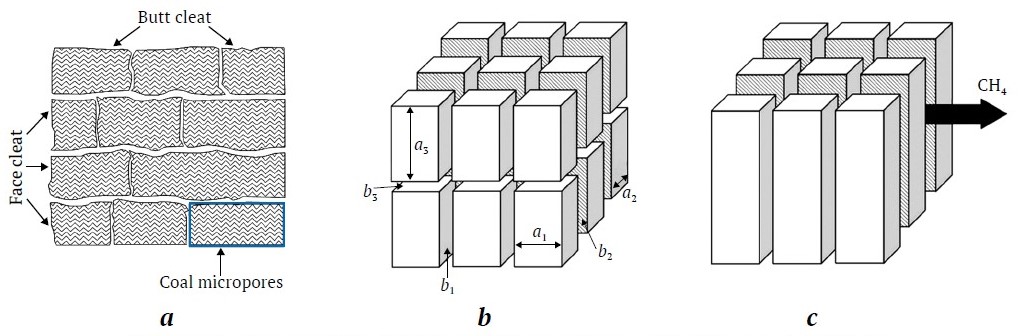
Fig. 1. Coal matrix model [9] and cellular (cubic) permeability model of the coal matrix [10, 14]:
a – coal matrix model; b – anisotropic model: a1, a2, a3 – the edge lengths of the cubic cells (intact coal matrix blocks),
b1, b2, b3 – the effective fracture apertures associated with the cleat systems; c – isotropic model
In general, absolute permeability can be derived from the Navier–Stokes equations for viscous fluid flow. In practice, however, due to limited availability of detailed information, Darcy’s law is commonly applied [10]. It is generally assumed that Darcy flow in coal is governed by flow within the cleat system, while the contribution of flow through matrix pores is negligible. Fracture permeability typically ranges from 0.001 to 100 mD, whereas the permeability of coal microblocks is on the order of microdarcies or nanodarcies [9, 11, 12]. Consequently, coal seam permeability is primarily controlled by the cleat system [8]. The presence of cleat results in pronounced permeability anisotropy. Experimental studies indicate that the ratio of permeability along the face cleat to that along the butt cleat varies from 2:1 to 17:1 [11, 13]. In this case, the components of the absolute permeability tensor of coal can be described using a model of a homogeneous impermeable medium intersected by two mutually orthogonal fracture systems [10]:
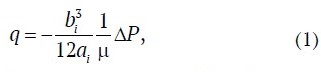 Equation (1) is applied to a single cleat system i contributing to the overall flow. Considering the roughness of the fracture-pore space, the parameter bi is referred to as the effective hydraulic aperture and is typically smaller than the corresponding cell edge ai. The absolute permeability of the cleat system is determined according to Scheidegger [15]:

or, in ratio form,
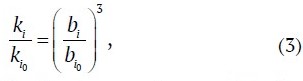
where bi is the effective fracture aperture, m; ki is the effective phase absolute permeability of the medium, m2; bi0 is the initial fracture aperture, m; and ki0 is the initial absolute permeability, m2.
The stress-strain state of a mined coal seam is primarily controlled by the lateral stress coefficient, mining depth, physico-mechanical properties of the rocks, structural heterogeneities, and sorption-kinetic properties of the rock mass.
Vertical stresses acting within the rock mass give rise to lateral confinement stresses. Several approaches exist for estimating lateral stress [16]: according to A. Heim, lateral stress in the rock mass equals lithostatic pressure, analogous to hydrostatic conditions; according to A. N. Dinnik, lateral stress is defined by the lateral stress coefficient characterizing elastic horizontal response to the weight of overlying strata; according to N. Hast, lateral stress includes, in addition to the Dinnik component, tectonic stresses induced by the regional tectonic stress field. In some parts of the Earth’s crust, horizontal tectonic stresses may even exceed lithostatic values, as confirmed by instrumental measurements [16, 17].
Mechanical or thermal loading of coal induces a range of sorption-related effects that result in expansion or contraction of the rock material [6, 9]. As a consequence, an additional and distinct component of the stress-strain state – sorption-induced stress – develops within the coal mass. The magnitude of sorption-induced deformation (and, consequently, stress) depends on gas saturation, gas pressure, temperature, as well as structural and textural characteristics of coal. Coal with high microporosity exhibits greater gas adsorption capacity, which enhances swelling effects. The relationship between stress and sorption-induced deformation in coal can be described using a generalized elasticity law modified to include sorption effects analogous to thermal expansion [18–20]. For a linear elastic medium, this relationship can be expressed as:

where Ks is the sorption modulus characterizing the influence of gas sorption-induced deformation; εs is the sorption strain caused by gas adsorption or desorption; δij is the Kronecker delta (δij = 1 if i = j, and δij = 0 if i ≠ j).
In coal permeability models, the dependence of permeability on the stress state is commonly expressed in terms of effective stress. The effective stress tensor is defined as:
 where σij are the components of the total stress tensor; ω is the Biot coefficient (dimensionless); Pf is the pore fluid pressure, Pa; and δij is the Kronecker delta (δij = 1 if i = j, and δij = 0 if i ≠ j).
Thus, the generalized stress model for a coal-bearing rock mass comprises several principal components: lithostatic stress σg, lateral confinement stress σr, tectonic stress σtect, thermal stress σth, and sorption-induced stress σs.
In empirical models describing the dependence of permeability on the stress-strain state, the mean stress within the rock mass is commonly used. Factors related to sorption-induced deformation and pore pressure are typically incorporated at the macroscale. Below, the principal empirical models are reviewed; for consistency and comparability, they are recast into a unified analytical form.
One of the earliest models of this type was proposed in [21] as an empirical relationship between permeability and mean stress, based on laboratory data obtained from coal samples collected from the Pittsburgh and Virginia coalfields (USA). The distinguishing feature of this model is that it accounts solely for stress-induced changes in fracture aperture resulting from mechanical loading:
 where kσ is stress-dependent permeability, mD; k0 is permeability at zero stress, mD; and σ is the mean normal stress, Pa.
In [22], an empirical relationship between permeability and effective stress was proposed for coals from the Leigh Creek Basin (Australia):
 This relationship was subsequently generalized into an exponential form that serves as a basis for more advanced permeability models:
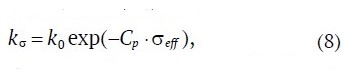 where kσ is the current coal seam permeability under effective stress, m2; k0 is the natural (initial) permeability of the coal seam in the absence of applied stresses, m2; Cp is the permeability sensitivity coefficient with respect to effective stress, Pa−1 (typically ranging from 0.01 to 0.1 Pa−1 depending on fracture structure); and σeff is the effective stress, Pa.
Model [23] accounts for the influence of sorption-induced deformation on fracture aperture variations. In contrast to the previous models, it employs changes in stress and strain rather than their absolute values:
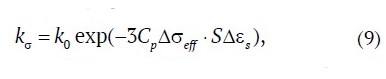 where Δσeff is the change in effective stress, Pa; Δεs is the change in sorption strain caused by variations in the amount of adsorbed gas; and S is the permeability sensitivity coefficient with respect to sorption-induced deformation. The parameter S typically varies in the range 0.1–1.0 (other parameters are identical to those in model [22]).
Model [24] also incorporates the effect of sorption-induced deformation on fracture behavior; however, unlike model [23], it uses absolute values of stress and strain:
 where γ is the sorption deformation compensation coefficient, varying between 0 and 1 (other parameters are consistent with models [22, 23]).
Models [25, 26], which further develop model [23], explicitly include coal porosity and sorption-induced deformation within a Darcy-flow framework. These models are based on changes in deformation and stress within the rock mass:
 where ϕ is the current coal seam porosity under effective stress (fraction); ϕ0 is the initial porosity in the absence of applied stresses (fraction); and n is an empirical exponent typically ranging from 1 to 3 (other parameters correspond to those in model [23]).
Model [27] proposes an alternative formulation to model [22] by explicitly accounting for the deformation properties of the rock. Its distinguishing feature is the use of mean stress and Young’s modulus in explicit form:
 In a generalized form, the model can be expressed as:
 where σ is the current mean normal stress, Pa; σ0 is the initial mean normal stress, Pa; E is the current Young’s modulus of the rock under mean stress, Pa; E0 is the initial Young’s modulus in the absence of applied stresses, Pa; Cp is the permeability sensitivity coefficient with respect to effective stress, Pa−1. The coefficient Cp typically ranges from 0.01 to 0.1 Pa−1, depending on fracture structure.
The mean normal stress is defined as:
 Using a lithostatic stress model combined with lateral stress estimated following the Dinnik approach enables evaluation of depth-dependent variations in mean and effective stress:
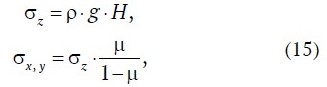 Fig. 2, a presents the calculated permeability-effective stress relationships for five models: Gray (1987) [22], Seidle (1992) [23], Palmer & Mansoori (1998) [24], Shi & Durucan (2004) [25, 26], and Karkashadze & Hautiev (2015) [27]. Using the same data, permeability-depth relationships can be derived (Fig. 2, b). All models exhibit a common trend of nonlinear permeability reduction with increasing effective stress, reflecting the physical processes of pore space compression and fracture closure within coal seams under external loading. At the same time, each model incorporates different physical and geomechanical mechanisms, resulting in distinct curve shapes.

Fig. 2. Permeability as a function of effective stress (a) and coal seam depth (b) for different model
(calculations performed using the following constants: Cp = 0.1 Pa−1; k0 = 1 · 10−12 m2 (1 mD);
Δεs = 0.5; S = 0.5; γ = 0.5; ϕ0 = 0.03; ϕ = 0.02; E0 = 5 · 109; E = 3 · 109)
The results of the comparative analysis demonstrate significant practical relevance for the coal mining industry. The derived relationships (Fig. 2) can be applied in the development of three-dimensional geomechanical and filtration models of coal-bearing rock masses used to assess degassing efficiency, gas-dynamic behavior of coal seams, and methane abundance in mine workings. Appropriate selection of a permeability model reduces uncertainty in the design of degassing systems, optimizes the placement and parameters of drainage boreholes, decreases the number of ineffective drilling operations, and mitigates the risk of gas-dynamic hazards. The expected economic benefits are associated with increased longwall productivity and reduced costs of degassing operations.
Analytical permeability models require data on the microstructural characteristics of coal, reservoir pressure parameters, fluid distribution within the coal-bearing rock mass, and the stress state governing coal deformation. However, at the scale of coal seam permeability modeling, acquiring such detailed information is practically infeasible. In this context, empirical relationships are more appropriate, as they enable coal seam permeability to be described through stress-state parameters. This simplifies the modeling procedure and makes it feasible in practice; however, reliable application of such relationships requires an assessment of model sensitivity and applicability limits.
Based on the analysis performed, the following criteria are proposed for model selection:
To evaluate model sensitivity to stress terms in their governing equations, a set of parametric (variation) calculations was performed by varying the stress values. Model sensitivity is defined as the derivative of permeability with respect to effective stress [28]. It characterizes the rate at which permeability changes as stress increases and is expressed as the following gradient:
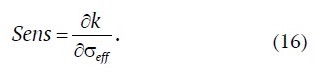
Sensitivity reflects the rate of permeability change in response to stress variations. High (absolute) sensitivity implies a more rapid reduction in permeability with increasing stress, whereas low sensitivity indicates a more gradual change. To determine applicability limits, the sensitivity analysis was carried out for the stress-dependent terms in each model using the parametric calculations described above. The calculation parameters are summarized in Table 1. The full set of results for all models is available as a dataset in the Zenodo repository: https://zenodo.org/records/18441537.
Table 1
Model parameters
No. | Model parameters | Parameter ranges |
1 | Variable parameters | Cp = 0.01; 0.05; 0.1 Pa−1 σeff = 0–50 MPa ∆σeff = 0–50 MPa ∆εs = 0.005; 0.05; 0.5 S = 0.1; 0.5; 1.0 E = 3×10⁹; 4×10⁹; 5×10⁹ Pa γ = 0.1; 0.5; 1.0 ϕ = 0.025; 0.035; 0.045 n = 1, 2, 3 |
2 | Constants | k0 = 1×10⁻¹² m2 (1 mD) Cp = 0.1 ∆εs = 0.5 S = 0.5 γ = 0.5 ϕ0 = 0.03 E0 = 5×10⁹ σ0 = 0 MPa |
The Gray (1987) model [22] describes permeability as a simple exponential function of effective stress (Fig. 3). This is a baseline model that accounts solely for compression of the pore space as stress increases. Permeability decreases rapidly at low stress levels and gradually stabilizes at higher stresses. The model exhibits moderate sensitivity and is commonly used as a reference for comparison with more advanced formulations. Owing to the absence of additional parameters, it is less suitable for site-specific conditions where sorption-related, thermal, or mechanical deformation effects must be considered.

Fig. 3. Sensitivity analysis of the Gray (1987) model [22]. Permeability (a) and sensitivity (b)
as functions of effective stress for different values of the coefficient Cp
The Seidle (1992) model [23] predicts a more pronounced reduction in permeability at low effective stress values, which is attributed to the influence of sorption-induced deformation. The model introduces an additional parameter, εs, representing sorption strain caused by gas adsorption or desorption (methane or carbon dioxide), as well as the parameter S, which characterizes the sensitivity of the sorption contribution. As a result, permeability decreases more rapidly within the effective stress range of 0–5 MPa. This model is particularly suitable for evaluating in situ coal masses where sorption effects are expected to play a significant role.
The Palmer & Mansoori (1998) model [24] exhibits a smoother permeability decline compared with models [22, 23], owing to its consideration of the combined effects of sorption-induced and thermal deformation. The parameter γ allows the influence of deformation associated with temperature variations and gas sorption to be represented. At low stress levels, the model behavior is similar to that of the Gray model [22]; however, as stress increases, the permeability reduction becomes more gradual. This model is well suited for assessing the natural permeability of coal-bearing rock masses at greater depths, where variations in the geothermal gradient become increasingly important.
The Shi & Durucan (2004) model [25, 26] explicitly incorporates the effect of porosity on permeability. Permeability is expressed as a power-law function of porosity ϕ, normalized to its initial value ϕ0. The model includes the exponent n, which controls the degree of porosity influence, as well as the sorption strain parameter εs. Among the models considered, it demonstrates the most uniform permeability reduction, particularly at effective stress levels exceeding 10 MPa. This behavior reflects its dependence on porosity and its comparatively lower stress sensitivity. The model is therefore appropriate for evaluating the natural permeability of rock masses characterized by potentially variable pore structure within the mineral skeleton.
The Karkashadze & Hautiev (2015) model [27] exhibits intermediate behavior between models [22] and [24] (Fig. 4). Its distinguishing feature is the explicit consideration of Young’s modulus E, normalized by its initial value E0 which enables permeability changes induced by elastic deformation of the coal seam to be described. Permeability decreases moderately with increasing effective stress, while the parameter Cp smooths the permeability curve within the intermediate stress range. The model is more sensitive to the mechanical properties of the coal mass, making it suitable for conditions where variations in physico-mechanical properties are significant, particularly in settings where elastic and tectonic stresses contribute substantially to the formation of the stress field.

Fig. 4. Sensitivity analysis of the Karkashadze & Hautiev (2015) model [27]. Permeability (a) and sensitivity (b)
as functions of effective stress for different values of the coefficient Cp; permeability (c) and sensitivity (d)
as functions of effective stress for different values of Young’s modulus of the rock mass, E
Analytical models of geological medium permeability require consideration of coal microstructural characteristics, reservoir pressure parameters, fluid distribution within the coal-bearing rock mass, and factors governing the stress–strain state. However, under coal seam-scale permeability modeling conditions, acquiring such detailed data is practically infeasible. In this context, a systematic analytical review and analysis of the mathematical frameworks of existing models were conducted, making it possible to identify the parameters that play a decisive role in shaping permeability-stress-strain relationships.
The study demonstrates that a wide range of stress–strain factors influence coal permeability. In accordance with the stated objectives, numerical experiments and sensitivity analyses of the principal empirical models with respect to variations in effective stress were performed. The parametric calculations revealed a common trend across all models: a nonlinear decrease in permeability with increasing effective stress. This behavior reflects the physical processes of pore space compression and fracture closure in coal seams under external loading. At the same time, each model is based on distinct physical and geomechanical assumptions, resulting in differences in curve shape and in the degree of sensitivity to key parameters. A comparative sensitivity analysis of the main empirical and analytical permeability models to changes in the stress-strain state of the coal-bearing rock mass was carried out.
The principal scientific contribution of this study lies in identifying differences in the sensitivity of existing permeability models to the geomechanical parameters of coal-bearing rock masses, as well as in delineating stress-strain ranges in which these models either diverge most strongly or, conversely, converge in their behavior. The following criteria are proposed for model comparison and selection: the nature of dominant deformation mechanisms within the seam; depth of occurrence and the expected range of effective stress; microstructural characteristics of the reservoir; approximate gas saturation and the intensity of sorption processes; and the presence of contrasting elastic properties among different coal ranks.
Within a unified problem formulation, the behavior of the models was examined for variations in effective stress over the range 0–50 MPa and depths up to 1500 m. This approach enabled comparison of their responses to intrinsic geomechanical parameters, including deformation modulus, sorption-induced strain, porosity, and elastic properties. Although the study does not aim to develop a new permeability model, it yields a methodological outcome: zones of increased and reduced sensitivity were identified for each relationship, facilitating informed selection of an appropriate permeability model for specific geomechanical conditions. Model choice should therefore depend on the dominant stress-field formation mechanisms within the coal seam: sorption-induced deformation is best captured by model [23]; deep seams with variable porosity are more adequately described by model [24]; and elastic deformation effects are most effectively represented by model [27]. These relationships can be applied to assess the natural permeability of coal seams in undisturbed rock masses.
Overall, the study provides a comprehensive comparative analysis of permeability models within a unified computational framework. Key zones of model divergence and convergence as functions of geomechanical parameters have been established, forming a scientific basis for their justified selection. The proposed criteria and specific recommendations constitute a practical toolkit for improving the reliability of filtration modeling of coal-bearing rock masses within defined stress and depth ranges.
1. Litvinov A. R., Kolikov K. S., Ishkhneli O. G. Accident and traumatism at coal industry enterprises in 2010–2015. Bulletin of Research Center for Safety in Coal Industry (Industrial Safety). 2017;(2):6–17. (In Russ.)
2. Sen S. Review on coal petrographic indices and models and their applicability in paleoenvironmental interpretation. Geosciences Journal. 2016;20(5):719–729. https://doi.org/10.1007/s12303-015-0046-x
3. Pan Z., Connell L. D. Modelling permeability for coal reservoirs: A review of analytical models and testing data. International Journal of Coal Geology. 2012;92:1–44. https://doi.org/10.1016/j.coal.2011.12.009
4. Lu S., Shi J., Jiao L. et al. A review of coal permeability models including the internal swelling coefficient of matrix. International Journal of Coal Science & Technology. 2024;11:50. https://doi.org/10.1007/s40789-024-00701-0
5. Egorova E. A., Kolikov K. S., Meguid H. A. Coal seam permeability assessment considering geological structure nonuniformity in the roof. Gornyi Zhurnal. 2016;(6):56–59. https://doi.org/10.17580/gzh.2016.06.02
6. Connell L. D., Lu M., Pan Z. An analytical coal permeability model for tri-axial strain and stress conditions. International Journal of Coal Geology. 2010;84(2):103–114. https://doi.org/10.1016/j.coal.2010.08.011
7. Slastunov S. V., Kolikov K. S., Puchkov L. A. Extraction of methane from coal seams. Moscow: Moscow State University Press; 2002. 383 p. (In Russ.)
8. Shilova T., Serdyukov S. Permeability of coking coals and patterns of its change in Leninsky Area, Kuznetsk coal basin, Russia. Applied Sciences. 2021;11(9):3969. https://doi.org/10.3390/app11093969
9. Shilova T. V., Rybalkin L. A., Yablokov A. V. Prediction of in-situ cleaved coal permeability. Journal of Mining Science. 2020;56:226–235. https://doi.org/10.1134/S1062739120026686
10. Parsons R. W. Permeability of idealized fractured rock. Society of Petroleum Engineers Journal. 1966;6(2):126–136. https://doi.org/10.2118/1289-PA
11. Seidle J. P. Fundamentals of coalbed methane reservoir engineering. Tulsa, OK: PennWell Books; 2011. 470 p.
12. Sander R., Pan Z., Connell L. D. Laboratory measurement of low permeability unconventional gas reservoir rocks: A review of experimental methods. Journal of Natural Gas Science and Engineering. 2017;37:248–279. https://doi.org/10.1016/j.jngse.2016.11.041
13. Gash B. W., Volz R. F., Potter G., Corgan J. M. The effects of cleat orientation and confining pressure on cleat porosity, permeability, and relative permeability. In: International Coalbed Methane Symposium. Tuscaloosa, USA: University of Alabama; 1993. Pp. 17–21.
14. Bai M., Elsworth D. Coupled processes in subsurface deformation, flow and transport. Reston, VA: American Society of Civil Engineers Press; 2000. 355 p. https://doi.org/10.1061/9780784404607
15. Scheidegger A. E. The physics of flow through porous media. 3rd ed. New York: University of Toronto Press; 1960. 353 p.
16. Zubkov A. V. The law of natural stress formation of the earth’s crust. Lithosphere (Russia). 2016;(5):146–151. (In Russ.)
17. Brown E. E., Hoek E. Trends in relationships between measured in situ stresses and depth. International Journal of Rock Mechanics, Mining Science & Geomechanics. 1978;15(4):211–215. https://doi.org/10.1016/0148-9062(78)91227-5
18. Langmuir I. The adsorption of gases on plane surfaces of glass, mica and platinum. Journal of the American Chemical Society. 1918;40(9):1361–1403. https://doi.org/10.1021/ja02242a004
19. Levine J. R. Model study of the influence of matrix shrinkage on absolute permeability of coalbed reservoirs. Geological Society Special Publication. 1996;109:197–212. https://doi.org/10.1144/GSL.SP.1996.109.01.14
20. Karacan C. O. Heterogeneous sorption and swelling in a confined and stressed coal during CO2 injection. Energy and Fuels. 2003;17(6):1595–1608. https://doi.org/10.1021/ef0301349
21. Somerton W. H., Soylemezoglu I. M., Dudley R. C. Effect of stress on the permeability of coal. International Journal of Rock Mechanics and Mining Sciences & Geomechanics Abstracts. 1975;12(5–6):129–145. https://doi.org/10.1016/0148-9062(75)91244-9
22. Gray I. Reservoir engineering in coal seams: Part 1 – the physical process of gas storage and movement in coal seams. SPE Reservoir Engineering. 1987;2(1):28–34. https://doi.org/10.2118/12514-PA
23. Seidle J. P., Jeansonne M. W., Erickson D. J. Application of matchstick geometry to stress dependent permeability in coals. In: Society of Petroleum Engineers, SPE Rocky Mountain Regional Meeting. Casper, Wyoming, USA, May 18–21, 1992. Richardson: SPE; 1992. https://doi.org/10.2118/24361-MS
24. Palmer I., Mansoori J. How permeability depends on stress and pore pressure in coalbeds: a new model. SPE Reservoir Evaluation & Engineering. 1998;1(6):539–544. https://doi.org/10.2118/52607-PA
25. Shi J. Q., Durucan S. Drawdown induced changes in permeability of coalbeds: a new interpretation of the reservoir response to primary recovery. Transport in Porous Media. 2004;56(1):1–16. https://doi.org/10.1023/B:TIPM.0000018398.19928.5a
26. Shi J. Q., Durucan S. A model for changes in coalbed permeability during primary and enhanced methane recovery. SPE Reservoir Evaluation & Engineering. 2005;8(4):291–299. https://doi.org/10.2118/87230-PA
27. Karkashadze G. G., Hautiev A. M. B. Modeling coal bed degassing with wells considering geomechanical stresses. Mining Informational and Analytical Bulletin. 2015;(2):235–242. (In Russ.)
28. Saveleva E., Svitelman V., Blinov P., Valetov D. Sensitivity analysis and model calibration as a part of the model development process in radioactive waste disposal safety assessment. Reliability Engineering & System Safety. 2021;210:107521. https://doi.org/10.1016/j.ress.2021.107521
Alexander I. Manevich – Researcher at the Geodynamics Laboratory
Moscow, Russian Federation
Scopus ID 57200214238
SPIN 6470-0460
Konstantin S. Kolikov – Dr. Sci. (Eng.), Professor, Head of the Department of Safety and Ecology of Mining Production, Mining Institute,
Moscow
Scopus ID 8946604700
SPIN 6470-0460
Nikolai V. Ledyaev – Head of the Emergency Resilience Department of Enterprises
Leninsk-Kuznetsky
Scopus ID 57864993900
SPIN 9307-6449
Ilya V. Losev – Researcher at the Geodynamics Laboratory
Moscow
Scopus ID 57214669904
SPIN 7963-1926
Dastan Zh. Akmatov – Cand. Sci. (Eng.), Senior Researcher at the Geodynamics Laboratory
Moscow
Scopus ID 57207911204
SPIN 1687-2529
Roman V. Shevchuk – Cand. Sci. (Eng.), Senior Researcher at the Geodynamics Laboratory
Moscow
Scopus ID 57206721960
SPIN 5379-1835
Manevich A.I., Kolikov K.S., Ledyaev N.V., Losev I.V., Akmatov D.Zh., Shevchuk R.V. Comparative analysis of coal permeability models accounting for the stress-strain state of the rock mass. Mining Science and Technology (Russia). 2026;11(1):35-45. https://doi.org/10.17073/2500-0632-2025-08-1015




Editor-in-Chief
Petrov V.L. Email this article (Login required)
Email the author (Login required)
Email this article (Login required)
Email the author (Login required) 119049, Moscow, Leninsky Prospect, 4, b. 1
The National University of Science and Technology MISIS (NUST MISIS)
Tel.: +7 (968) 848-61-24
E-mail: send@misis.ru





