


Contents
Scroll to:
https://doi.org/10.17073/2500-0632-2026-05-1174
Scroll to:
Modern mining operations are conducted under complex geological conditions characterized by variable gas-dynamic and aerodynamic parameters, placing stringent demands on the reliability and stability of mine ventilation systems. This study presents the results of mathematical modeling based on integro-differential equations describing unsteady airflow distribution and accounting for distributed parameters, including airway geometry, air leakage, and heat and mass transfer. A non-Lie method was used to identify an additional invariance that cannot be detected by classical Lie–Ovsiannikov symmetry analysis. A conserved quantity – the generalized circulation Γ(t) – was identified. It comprises the classical circulation term and an additional term accounting for flow unsteadiness, thereby enabling airflow reversal in diagonal connections to be predicted without iterative recalculation of the entire ventilation network. A numerical algorithm combining finite-difference and finite-element methods was developed. Application of the model to the airflow distribution network of the No. 15 West longwall face identified critical diagonal branches with a high risk of airflow reversal and determined the ranges of the stability indices. The findings provide a theoretical basis for systems designed to provide early warning of emergency ventilation modes and for adaptive ventilation control, with the potential to improve mining safety.
Bosikov I.I., Klyuev R.V., Silaev I.V., Verisokin A.E. Mathematical modeling of the reliability of mine ventilation systems using integro-differential equations with additional invariance. Mining Science and Technology (Russia). 2026;11(2):151-158. https://doi.org/10.17073/2500-0632-2026-05-1174
The reliability of mine ventilation systems is essential to the safety and efficiency of mining operations. Under variable and often extreme external conditions, including fluctuations in pressure, temperature, humidity, and air composition, maintaining stable ventilation performance presents a complex engineering challenge. Integro-differential equations are widely used to describe the processes occurring in such systems because they can account for both instantaneous and cumulative effects, as well as interactions among multiple physical factors. Several issues remain unresolved, including the absence of invariants that remain conserved under abrupt changes in airway geometry, the difficulty of predicting airflow reversal under multiple simultaneous disturbances, and the poor convergence of numerical methods for stiff systems. This study focuses on the first two of these issues.
Conventional analysis and modeling methods do not always provide the required accuracy or solution stability under uncertain and unsteady conditions. In this context, the additional invariance of integro-differential equations is of particular interest. An equation is said to possess additional invariance when certain characteristics of the system remain unchanged under transformations outside the classical symmetry group. This approach can reveal hidden relationships, improve the stability of numerical methods, and provide more robust criteria for the design and operation of ventilation systems.
This study aims to develop and theoretically substantiate a mathematical model of mine ventilation system reliability based on integro-differential equations with additional invariance and to assess its effectiveness in predicting the stability of airflow distribution under time-varying external disturbances.
Accordingly, the invariant Γ(t) is introduced to predict airflow reversal. The convergence of the numerical methods lies outside the scope of this study and requires separate investigation.
To achieve this aim, the study pursued the following objectives:
The study applies the theory of additional invariance of integro-differential equations to the reliability analysis of mine ventilation systems, providing a potential basis for safer and more efficient ventilation control [1–3].
The model represents the mine ventilation system as a network of mine workings, including shafts, crosscuts, drifts, and longwalls faces, together with fan installations, airflow regulators, and stoppings. The network is treated as a distributed-parameter system. The model describes unsteady aerodynamic processes involving changes in pressure, airflow rate, temperature, and air composition in each network branch.
The study used an integrated approach combining theoretical analysis, mathematical modeling, numerical calculations, and field validation to investigate the additional invariance of integro-differential equations and its application to mine ventilation system reliability.
Theoretical analysis. Existing integro-differential models of airflow distribution in mine ventilation networks were reviewed. Particular attention was given to the conditions under which solutions remain invariant under specified transformations, allowing additional symmetries and the associated conservation laws to be identified.
Mathematical modeling. Integro-differential models were developed from the fundamental equations of aerodynamics and heat transfer, accounting for mine-specific conditions, including changes in airway geometry, air leakage, temperature, and humidity. The mine ventilation network was represented as a directed graph. Its edges correspond to mine workings with specified aerodynamic resistances, whereas its nodes represent airway junctions, splits, and intersections. For each edge, the model includes a momentum equation for airflow based on a generalized Darcy–Weisbach equation incorporating inertial terms, a continuity equation, and a heat-balance equation accounting for heat exchange with the surrounding rock mass and moisture release. Invariance was analyzed using group analysis of differential equations and Lie group theory.
Numerical methods. Numerical algorithms combining the finite difference and finite element methods were developed and implemented to solve the resulting integro-differential equations. The model inputs include airway geometry (length, cross-sectional area, and shape); the aerodynamic resistances of fixed and adjustable network components; fan characteristics expressed as pressure–quantity characteristic curves; and the initial and boundary conditions, including pressure, temperature, and humidity at the surface and at the working face. The model outputs are the time-dependent distributions of airflow rate, static pressure, temperature, and methane concentration across the network branches, together with stability indicators such as the pressure-based stability margin and the risk of airflow reversal in diagonal branches. A series of numerical tests was performed for different ventilation-network configurations to assess the stability and reliability of the solutions.
Qualitative reliability assessment. The obtained theoretical and numerical results were compared with known physical laws and literature data on airflow parameters in coal mines. This allowed a preliminary conclusion on the qualitative agreement of the proposed model with the physics of the processes. A full‑scale verification with quantitative comparison against field data requires a separate study and was not performed in this work.
Together, these methods provide a framework for evaluating the role of additional invariance in mine ventilation system reliability [2, 4, 5].
A mine ventilation system is a complex distributed network of mine workings, including shafts, crosscuts, drifts, and longwalls. Unsteady airflow through this network is driven by pressure differences generated by fan installations, natural ventilation pressure, and heat release. The mathematical description of such a system includes:
In compact operator form, the system can be written as:
L0(∂)u(t, x) = 0, L1(∂) u(t, x) = 0, (1)
where u = (Q, p, ρ, T)⊤ is the vector of unknown field variables—airflow rate, pressure, density, and temperature—and L0 and L1 are differential operators containing partial derivatives with respect to time and spatial coordinates. Additional relations, including junction conditions at the network nodes and boundary conditions at the surface and the working face, define the structure of the ventilation graph.
Classical Lie–Ovsiannikov and non-Lie methods for symmetry analysis
The Lie–Ovsiannikov method is traditionally used to analyze the symmetries of differential equations. It seeks invariance under sets of first-order differential operators. Although this approach is effective for a broad class of systems, some equations possess hidden symmetries that cannot be detected by the classical method.
Studies [4–6] proposed an alternative to the Lie–Ovsiannikov method, hereinafter referred to as the non-Lie method, for identifying additional invariance in systems of differential equations. This method has revealed additional invariance in the Dirac and Maxwell equations [7, 8], as well as in several other Poincaré-invariant equations.
Definition. Let L(x, p) be a linear differential operator. The equation
L(x, p)ψ = 0
is said to be invariant under a set of operators Q = {QA} if, for each A,
L(x, p)(QAψ) = 0
provided that ψ satisfies the original equation. The set Q is referred to as a set of additional invariance operators if its elements cannot be obtained by the classical Lie–Ovsiannikov method, for example, when QA are integro-differential operators or differential operators of order higher than one.
Unlike classical symmetries, additional invariance describes properties of solutions that remain unchanged under transformations outside the Lie–Ovsiannikov symmetry group of the equation. These properties are often associated with integral conservation laws that do not follow directly from the equations of motion.
The system of equations describing unsteady airflow distribution in a mine ventilation network, written in operator form, possesses additional invariance. The principal steps of the non-Lie method used to identify this invariance are described in [7, 8–10].
The original system of operator equations is first transformed into a canonical form, namely, a decoupled system in which the individual components of the vector-valued solution no longer depend on one another. This is achieved through an invertible transformation U(p) acting on the solution vector. The transformation substantially simplifies the subsequent invariance analysis.
The solution set of the decoupled system is then examined to identify operators that commute, in a generalized sense, with the differential operator defining the original equation. The analysis shows that such operators exist and form a Lie algebra. In particular, for system (1) with (m=0), a case analogous to electrodynamics, a nine-dimensional Lie algebra of additional invariance operators was identified. Its basis elements Qab, where (a, b = 1, 2, 3), are integro-differential operators. Their action on a solution therefore involves both differentiation and integration with respect to the spatial variables.
Explicit expressions for the operators Qab are provided in [11–13]. For the purposes of this study, their physical implications for mine ventilation are more important than their analytical form.
For a closed contour C in the ventilation network, that is, a sequence of mine workings forming a cycle, invariance under the operators Qab implies the conservation of a quantity referred to here as the generalized circulation:

where v is the air velocity in the mine working, directed along its axis; S is any surface bounded by the contour C; and c is the speed of sound in air, approximately 340 m/s under standard conditions.
The first term,

is the classical velocity circulation known from fluid mechanics. The second term,

arises from the additional invariance and is absent from conventional ideal-fluid models. It accounts for unsteady effects: changes in air velocity over time produce an additional contribution to the conserved quantity.
The quantity Γ(t) is constant in time for any solution of the system. Thus, if Γ(0) is known at the initial time, for example, under normal ventilation conditions, Γ(t) remains unchanged as the network parameters vary, including airway resistances, fan operating modes, and thermal effects. This remains valid until the solution ceases to exist, for example, when airflow reversal occurs.
This invariant provides a practical tool for mine ventilation analysis. Consider a diagonal connection consisting of two airflow paths and a cross-connection, where airflow reversal may occur. Under the conventional approach, the entire network must be recalculated repeatedly as the resistance of one branch changes in order to determine when stability is lost. With the invariant Γ(t), it is sufficient to calculate the invariant once for the critical contour and then monitor the departure of the current system state from the state that would preserve Γ. Once this departure exceeds a specified threshold, the system is approaching airflow reversal.
Additional invariance offers the following practical applications:
The following section presents specific examples of using the invariant Γ(t) to analyze the stability of the ventilation network of the No. 15 West longwall face (Fig. 1) and compares the results with conventional ventilation pressure analysis.
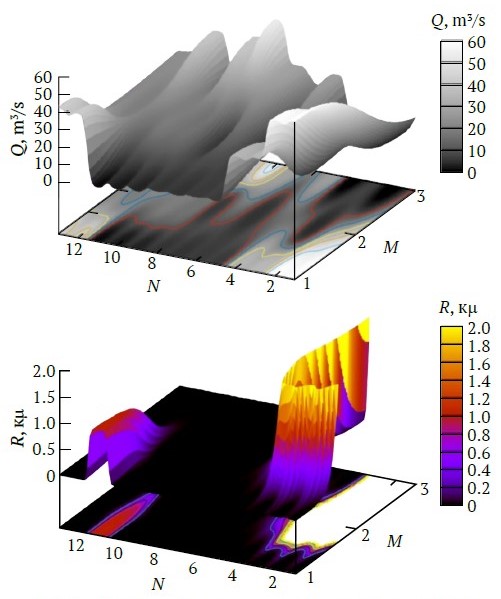
Fig. 1. Aerodynamic parameters of loops decomposed into components of bounded complexity
The effectiveness of the intelligent ventilation control system was evaluated in terms of temperature, diffusion, pressure, pressure drop, gas and dust conditions, including methane emissions and dust concentration, airflow distribution, and equipment operating status.
The decomposition method was refined and applied to determine the qualitative and quantitative characteristics of the ventilation layouts in the production districts under study.
The proposed method identifies loops of varying complexity more efficiently and supports the selection of an appropriate strategy for controlling the ventilation systems of production districts [11–14].
Analysis of the loops in the airflow distribution layout of the No. 15 West longwall face (see Fig. 1) identified 12 active diagonal branches with a wide range of stability-index variation. Airflow reversal was possible in 10 diagonal branches. A further 54 diagonal branches were classified as non-realizable because their stability-index ranges lay outside the resistance adjustment range of the mine airflow regulators. Five diagonal branches were located in return airways. The second stage of the study examined the airflow distribution layout of the No. 15 East longwall face.
Aerodynamic parameters were measured at selected sections of the mine workings.
For each modified loop, aerodynamic resistance was calculated from the corresponding ventilation pressure drop, and the stability criterion was determined at the onset of airflow reversal. Airflow reversal adversely affects the ventilation of production districts, particularly under emergency conditions, and poses a safety hazard. Improper placement of airflow control devices increases the risk of reversal [7, 15].
The ventilation control method is implemented in dedicated software that supports both ventilation control and the selection of mine ventilation layouts. The software also calculates aerodynamic parameters for selected airflow distribution configurations under operating conditions.
The following organizational and technological measures were recommended:
The findings offer a new perspective on the stability of mine ventilation systems. Unlike conventional approaches based on steady-state ventilation pressure calculations and iterative methods [1, 3, 10], the proposed invariant-based approach provides a quantitative estimate of the stability margin of diagonal connections without repeatedly recalculating the entire network. This shifts ventilation management from reactive response to predictive control, in line with current trends in mine ventilation risk management [2, 6].
When the model was applied to optimize ventilation under increasing production rates, the system demonstrated considerable adaptability to changes in production conditions. This helped prevent system overload and maintain acceptable working conditions. These findings support the conclusions reported in [8, 9] regarding the need to account for the dynamics of gas-dynamic processes.
The physical interpretation of the generalized circulation Γ(t) warrants particular attention. Classical circulation reflects steady vortical structures, whereas the additional term containing the time derivative of velocity captures flow inertia and changes in kinetic energy. The invariant Γ(t) is sensitive to transient dynamics that conventional models either disregard or can represent only through complex calculations [10, 14]. The model therefore incorporates effects that are difficult to predict within conventional frameworks and builds on the non-Lie method of symmetry analysis [7, 11].
Under geologically complex conditions characterized by frequent pressure fluctuations, the model adapted successfully and helped maintain stable ventilation and safe working conditions. This result is consistent with field observations reported in [5, 13], which showed that conventional ventilation layouts are sensitive to external fluctuations.
Analysis of the loops in the No. 15 West longwall ventilation network identified 12 active diagonal branches with wide ranges of stability-index variation. Airflow reversal was possible in 10 diagonal branches, five carried return air, and 54 were classified as non-realizable because their stability-index ranges lay outside the resistance adjustment range of the mine airflow regulators. These findings indicate that the invariant-based approach effectively identifies critical network components requiring priority monitoring, consistent with the decomposition methodology used in [11–14].
The adaptive model reduced energy consumption by 10–15% compared with conventional methods, which is consistent with the results of fan operating mode optimization reported in [16, 17].
It should be emphasized that the proposed invariant criterion should be regarded as an indicator rather than a definitive condition of airflow stability. A deviation of Γ(t) from its conserved value is highly likely to indicate impending airflow reversal; however, preservation of the invariant does not guarantee stability under abrupt changes in airway geometry, such as roof falls or blockages[10, 15]. Future research should combine the invariant-based approach with catastrophe theory and fuzzy logic methods [2, 9] to develop integrated reliability criteria that account for both deterministic and stochastic factors.
From an engineering perspective, the most promising application is to incorporate the calculation of Γ(t) into an automated ventilation control system. This would require monitoring air velocity in the key branches of critical contours using ultrasonic or thermal anemometric sensors and performing numerical integration with a time step matched to the sensor sampling interval [4, 14]. If Γ(t) moves outside the specified threshold band, the system could issue a warning or initiate a preemptive adjustment of fan operating conditions [12, 16, 17]. As demonstrated in [18], appropriate selection of motor ratings and operating modes for ventilation fans can substantially improve energy efficiency and reduce operating costs, which is consistent with the proposed adaptive-control approach. The model thus provides both a theoretical basis and a practical framework for developing early-warning systems for emergency conditions in coal mines [8, 14].
1. Balovtsev S. V. Monitoring of aerological risks of accidents in coal mines. Mining Science and Technology (Russia). 2023;8(4):350–359. https://doi.org/10.17073/2500-0632-2023-10-163
2. Skopintseva O. V., Balovtsev S. V. Air quality control in coal mines based on gas monitoring statistics. Mining Informational and Analytical Bulletin. 2021;(1):78–89. (In Russ.) https://doi.org/10.25018/0236-1493-2021-1-0-78-89
3. Kaledina N.O. Justification of ventilation system parameters for high-performance coal mines. Mining Information and Analytical Bulletin. 2011;(7):261–271. (In Russ.)
4. Bahvalov L. A., Barannikova I. V., Agabubayev A. T. Review of the modern systems of automated ventilation control. Mining Information and Analytical Bulletin. 2017;(7):22–28. (In Russ.)
5. Mazina I. E., Manevich A. I. The methods of prediction of coal mine methane. Mining Information and Analytical Bulletin. 2015;(8):229–233. (In Russ.)
6. Puchkov L. A., Kaledina N. O., Kobylkin S. S. System solutions for methane safety in coal mines. Mining Journal. 2014;(5):12–17. (In Russ.)
7. Kharik E. K., Astanin A. V. Numerical analysis of the ventilation of a disused mine area in a 3D formulation. Vestnik of Lobachevsky University of Nizhni Novgorod. 2011;(4–5):2567–2569. (In Russ.)
8. Bosikov I. I., Klyuev R. V., Mayer A. V., Stas G. V. Development of a method for analyzing and evaluating the optimal state of aerogasodynamic processes in coal mines. Sustainable Development of Mountain Territories. 2022;14(1):97–106. (In Russ.) https://doi.org/10.21177/1998-4502-2022-14-1-97-106
9. Bosikov I. I., Klyuev R. V., Khetagurov V. N. Analysis and comprehensive evaluation of gas-dynamic processes in coal mines using the methods of the theory of probability and math statistics analysis. Sustainable Development of Mountain Territories. 2022;14(3):461–467. (In Russ.) https://doi.org/10.21177/1998-4502-2022-14-3-461-467
10. Levin L. Yu., Semin M. A., Maltsev S. V., Zaitsev A. V. Methodological framework for designing ventilation control systems for complex mine ventilation networks. Mining Science and Technology (Russia). 2026;11(1):70–79. https://doi.org/10.17073/2500-0632-2025-08-1022
11. Thakur P. 1 – Underground coal mine atmosphere. In: Advanced Mine Ventilation. Respirable Coal Dust, Combustible Gas and Mine Fire Control. Woodhead Publ.; 2019. Pp. 3–16. https://doi.org/10.1016/B978-0-08-100457-9.00001-8
12. Wang K., Jiang Sh., Wu Zh. et al. Intelligent safety adjustment of branch airflow volume during ventilation-on-demand changes in coal mines. Process Safety and Environmental Protection. 2017;111:491–506. https://doi.org/10.1016/j.psep.2017.08.024
13. Mashintsov E. A., Kotlerevskaya L. V., Krinichnaya N. A. Management of ventilation in the coal mine as difficult system. Izvestiya Tula State University. Technical Sciences. 2014;(7):188–195. (In Russ.)
14. Vasenin I.M., Shrager E.R., Kraynov A.Yu. et al. Mathematical simulation of non-stationary ventilation processes of coal mining. Computer Research and Modeling. 2011;3(2):155–163. (In Russ.)
15. Rychkovsky V. M., Sergeev O. A., Tyurin V. P. On ventilation management in Kuzbass coal mines. Occupational Safety in Industry. 2004;(11):8–9. (In Russ.)
16. Bosikov I. I., Kambolov D. A., Verisokin A. E., Silaev I. V. Analysis and solution of key problems of analytical theory of potentials applied to models of air distribution in coal mines. Sustainable Development of Mountain Territories. 2025;17(3):1399–1408. (In Russ.) https://doi.org/10.21177/1998-4502-2025-17-3-1399-1408
17. Sjöström S., Klintenäs E., Johansson P., Nyqvist J. Optimized model-based control of main mine ventilation air flows with minimized energy consumption. International Journal of Mining Science and Technology. 2020;30(4):533–539. https://doi.org/10.1016/j.ijmst.2020.05.016
18. Klyuev R. V. Assessment of energy efficiency improvement strategies for ventilation and hoisting systems during the reconstruction of the Molibden mine. Mining Science and Technology (Russia). 2025;10(1):84–94. https://doi.org/10.17073/2500-0632-2024-10-362
Igor I. Bosikov – Dr. Sci. (Eng.), Associate Professor, Head of the Department of Oil and Gas Engineering
Vladikavkaz
Scopus ID 56919738300
SPIN 6124-9534
Roman V. Klyuev – Dr. Sci. (Eng.), Professor, Department of Automation and Control
Moscow
Scopus ID 57194206632
ResearcherID J-8000-2014
SPIN 6124-9534
Ivan V. Silaev – Cand. Sci. (Eng.), Associate Professor, Head of the Department of Physics and Astronomy
Vladikavkaz
Scopus ID 57189031683
SPIN-code 6537-8607
Ivan V. Silaev – Cand. Sci. (Eng.), Associate Professor, Head of the Department of Physics and Astronomy
Stavropol
Scopus ID 57189031683,
SPIN 6537-8607
Bosikov I.I., Klyuev R.V., Silaev I.V., Verisokin A.E. Mathematical modeling of the reliability of mine ventilation systems using integro-differential equations with additional invariance. Mining Science and Technology (Russia). 2026;11(2):151-158. https://doi.org/10.17073/2500-0632-2026-05-1174




Editor-in-Chief
Petrov V.L. Email this article (Login required)
Email the author (Login required)
Email this article (Login required)
Email the author (Login required) 119049, Moscow, Leninsky Prospect, 4, b. 1
The National University of Science and Technology MISIS (NUST MISIS)
Tel.: +7 (968) 848-61-24
E-mail: send@misis.ru





